Hydrangeas in Nantucket, MA
Planting, siting, and season-long care for Nantucket's signature hydrangeas, coaxing full, richly blue blooms year after year.
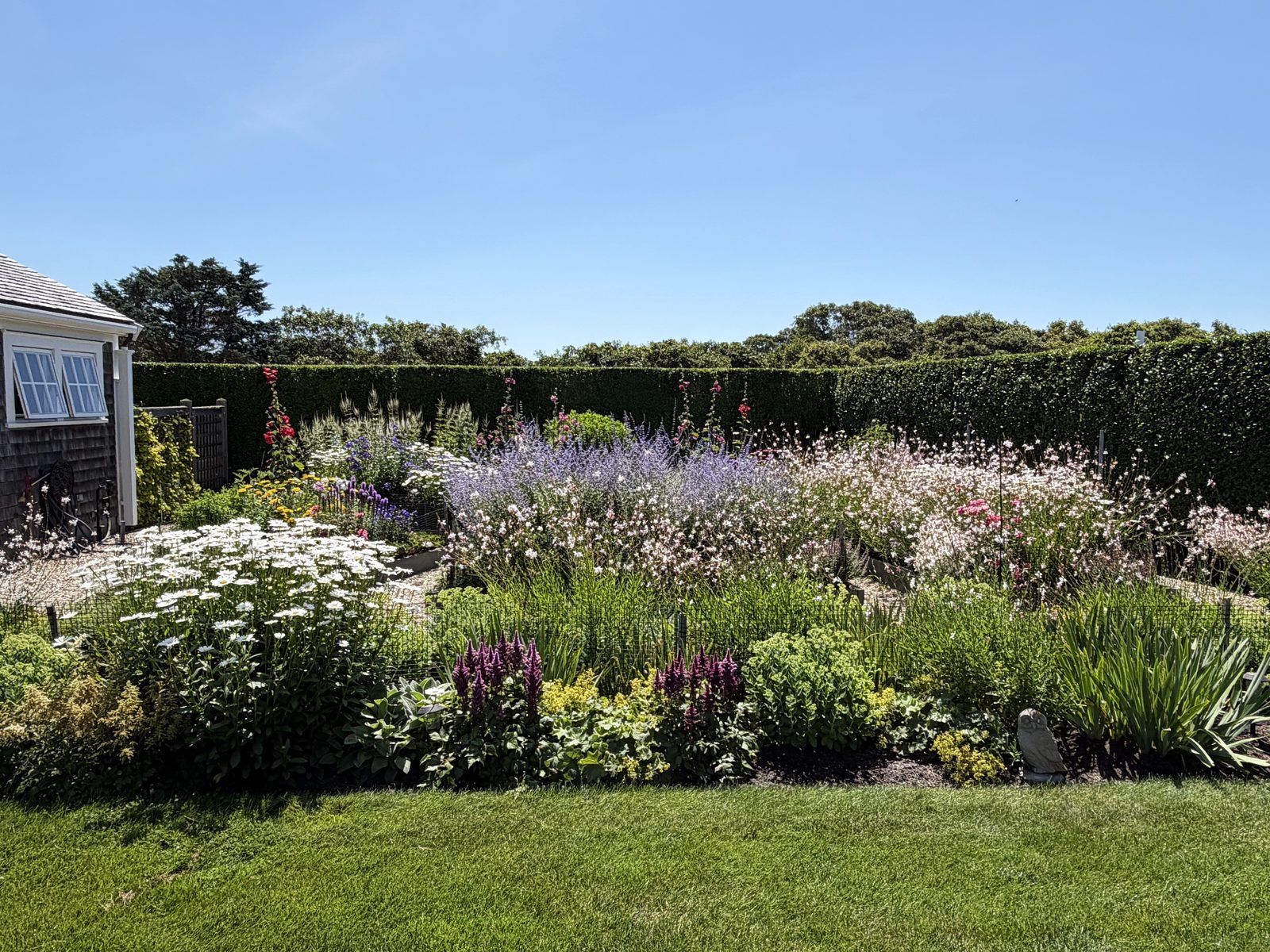
No plant says Nantucket like the blue mophead hydrangea spilling over a weathered fence in July. The island's naturally acidic sandy soil is part of the magic, because that acidity is what turns bigleaf hydrangea blooms their famous deep blue. But hydrangeas are also fussier than they look here: salt wind burns exposed foliage, too much sun scorches blooms, and careless pruning removes next year's flowers before they ever open.
Ryan Conway sites and cares for hydrangeas to work with Nantucket's conditions rather than fight them, placing them where a wall, hedge, or house buffers the worst salt wind while still giving morning sun. He knows which types bloom on old wood versus new, so pruning is timed to protect the buds instead of cutting off the show, and he manages soil acidity and aluminum availability to hold that signature blue. Feeding and consistent moisture round out plants that get fuller and more spectacular each season.
What's included
- Variety selection: bigleaf mophead, lacecap, panicle, and more
- Siting for shelter from salt wind with the right sun exposure
- Planting in amended, acidic soil for strong establishment
- Soil and amendment management to hold true-blue bloom color
- Correct, well-timed pruning based on old-wood vs. new-wood bloomers
- Seasonal feeding, mulching, and moisture management for fuller blooms
How the work goes
- Site for shelter first. Hydrangeas go where they get sun but sit out of the hardest salt-laden wind, most often in the lee of the house, a hedge, or a wall. Siting does more for their long-term health than any amount of later care.
- Prepare the soil generously. Plenty of organic matter is worked into fast-draining sand so the ground can hold the steady moisture these shrubs want between waterings.
- Match the type to the job. Bigleaf hydrangeas give the classic island mophead but flower on old wood. Panicle and smooth types flower on new growth. Which one is planted determines how the shrub is pruned for the rest of its life.
- Manage soil chemistry where blue is the point. Soil pH is tested and, if it has drifted, acidified gradually across a season rather than pushed hard in a single treatment.
- Prune to the type, at the right moment. Bigleaf hydrangeas get deadheading and the removal of genuinely dead wood in spring, once buds have broken and live growth is visible. The types that flower on new wood can be cut back properly.
What to think about before you start
Nearly every unhappy hydrangea on the island is unhappy for one of three reasons, and none is the plant's fault. It was pruned in fall or early spring, which removed the flower buds set the previous summer. It sits in too much exposure, so it scorches and wilts however much it is watered. Or the soil around its roots has drifted toward neutral, usually near a foundation or new masonry, and the blue has gone muddy or pink.
The color question deserves a straight answer: it is soil chemistry, it moves slowly, and it applies to bigleaf hydrangeas rather than to every hydrangea. Nantucket's naturally acidic soil already does most of the work, which is why the island's hydrangeas are famously blue, and why a plant that has changed color is usually telling you something has changed around its roots.
When it happens
Plant in spring or early fall. Deadhead and remove dead wood in spring once growth is clearly visible, never in fall, when next summer's buds are already formed.
Let's make your property the best-kept on the block.
Tell us about your property and what you have in mind. We'll walk it with you and put together a clear, honest plan — no pressure, no job too big or small.